Cost-Effective Tile Drainage Solutions for Small Farms
Installing and planning farm drainage systems can be a daunting task. Especially for new farmers, hobby farmers, or family run small farms without huge financial backing. In this article we’ll take a look at the benefits of field drainage installation using subdrain, financing programs and rebates, and how to select the right product for your farm.
The Benefits of Field Drainage Installation
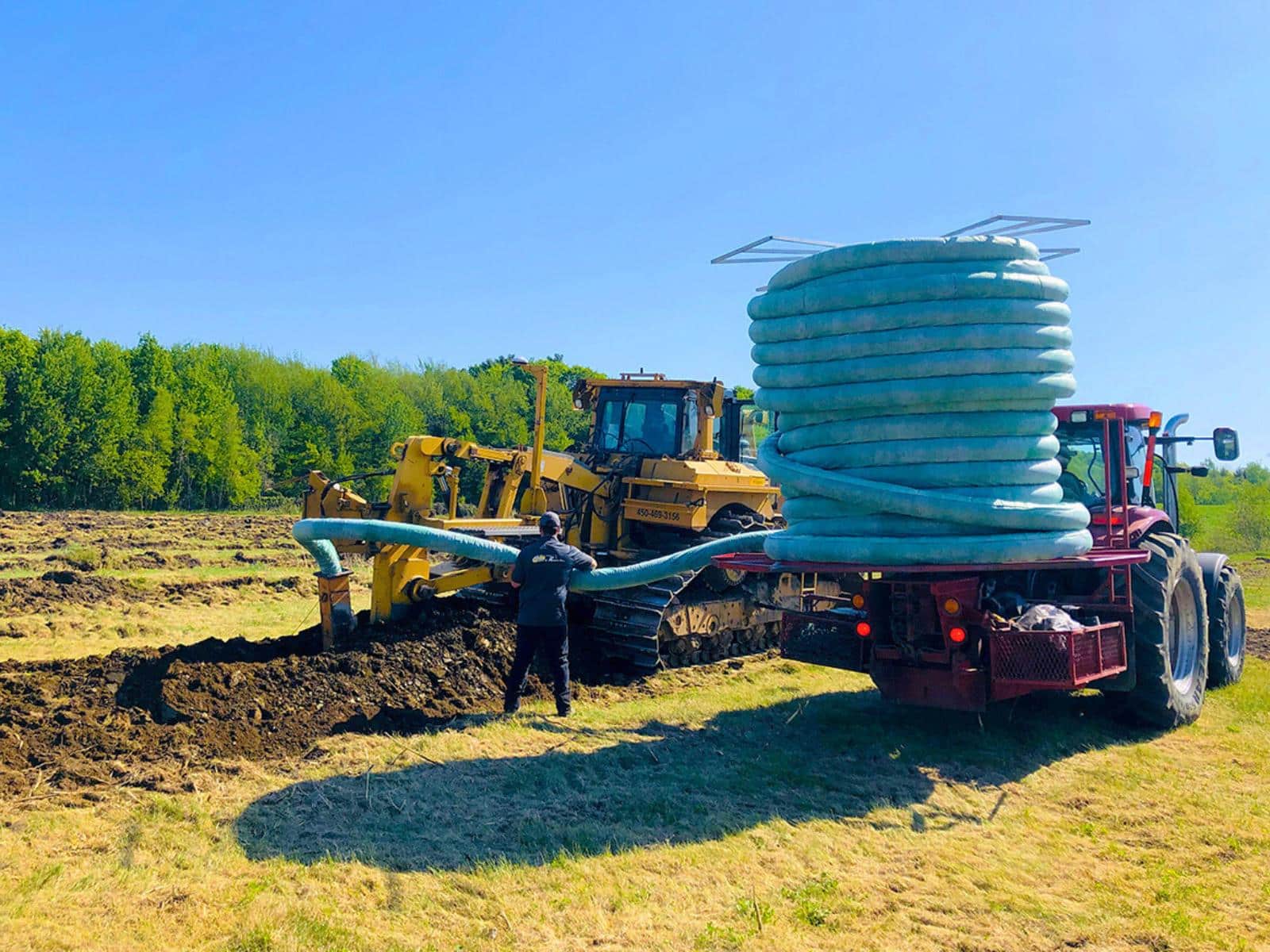
Improved field drainage creates significant benefits for your soil health, environmental impact, and increased crop yield resulting in long term return on investment. Subdrain works in the following ways:
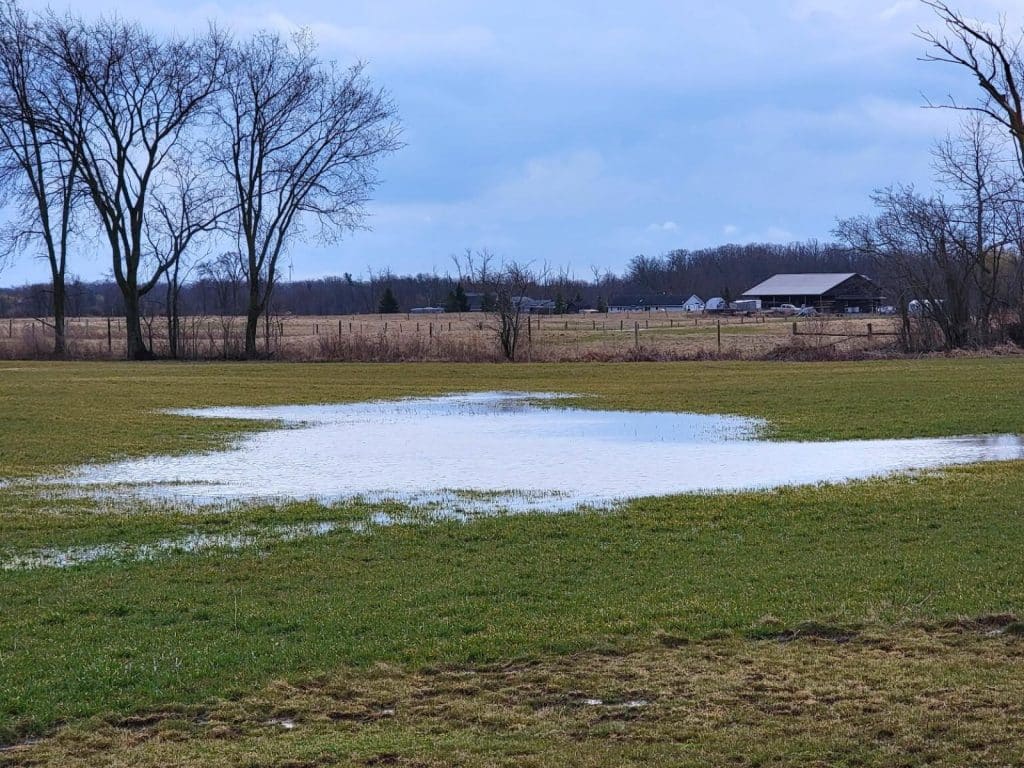
- Removes Excess Water: Effective subsurface drainage removes excess soil water in the root zone, allowing for improved soil aeration. Prolonged exposure to saturated conditions and poor soil aeration can stress the crop, reducing yield.
- Increased Workability: Drainage can improve field trafficability, allowing more reliable field access while reducing compaction. Drier soils are less susceptible to compaction than wetter soils.
- Deeper Roots: Drainage enables crops to establish deeper root systems in fields, allowing greater access to nutrients and soil water.
- Improved Consistency: Drainage can reduce the year-to-year variability in yields from poorly drained fields. Drainage can increase nitrification (the conversion of ammonia to nitrate) in most soils, providing more nitrate for plant uptake.
Increased yields are the result of better drought management. Desaturating the soil early in the season allows soil to warm quicker, increases air in the soil, and improves microbial activity. It gives a deeper root zone through the whole field because the water table becomes more level to the field tiles. Farmers have told us that they expect a 10 – 20% increase in crop yield after investing in proper drainage.


Government Programs to Help Farmers Install Drainage
Several government programs and financial incentives exist to help farmers invest in land improvement and subdrain (tile drainage) systems. These programs prioritize environmental sustainability, soil health, and increased productivity. In Ontario, dedicated loan programs are available, while federal programs offer cost-share opportunities. All programs listed below are linked to their information and application pages to help you find the best options for your farm.
Ontario Subdrain and Land Improvement Programs
- Tile Loan Program (Ontario): This program provides low-interest loans to agricultural property owners to install tile drainage systems, covering up to 75% of the total cost.
- Terms: 10-year term, with repayments made annually through property tax installments.
- Maximum: The maximum loan is generally $50,000 per farmer per year, subject to municipal approval.
- Regional Tile Drainage Program (NOHFC): Specifically for Northern Ontario, this program covers 50% of tile drainage contractor costs up to $500 per acre, with a maximum investment of up to $1 million.
- Resilient Agricultural Landscape Program (RALP): As part of the Sustainable Canadian Agricultural Partnership (Sustainable CAP), this program provides funding to farmers to improve on-farm productivity and increase resilience through better soil management.
Canadian Federal/Joint Programs
- Sustainable Canadian Agricultural Partnership (Sustainable CAP): The main 2023–2028 framework providing 50–70% cost-share for various on-farm improvements.
- On-Farm Climate Action Fund (OFCAF): Provides funding for producers to adopt Beneficial Management Practices (BMPs), including those that enhance soil health and improve water management.
- AgriInvest: A self-managed account with matching government contributions that can be used for small income declines or to make investments to improve land and manage risk.
- Canadian Agricultural Loans Act (CALA): A loan guarantee program that makes it easier for producers to access credit for purchasing land or installing drainage systems.
Our Inventory and Delivery
How to Choose the Right Products
When you begin researching drainage solutions, one of the first things to understand is the soil type throughout your fields. Different drainage products are recommended depending on the levels of sand or clay in your soil. Your soil type also impacts what time of year your installation should take place due to the moisture content. As an example, subdrain shouldn’t be installed in wet clay, while wet sand can be more forgiving during installation. We took some notes while attending the Land Improvement Contractors of Ontario (LICO) Drainage Day which you can find in our blog on soil types here.
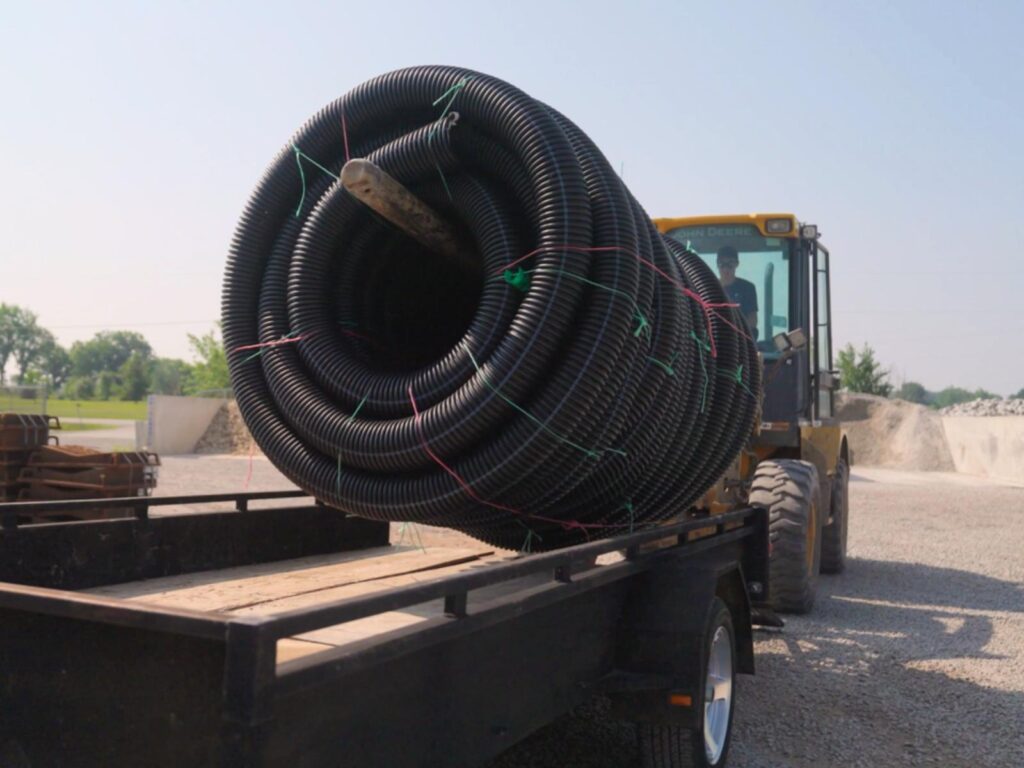
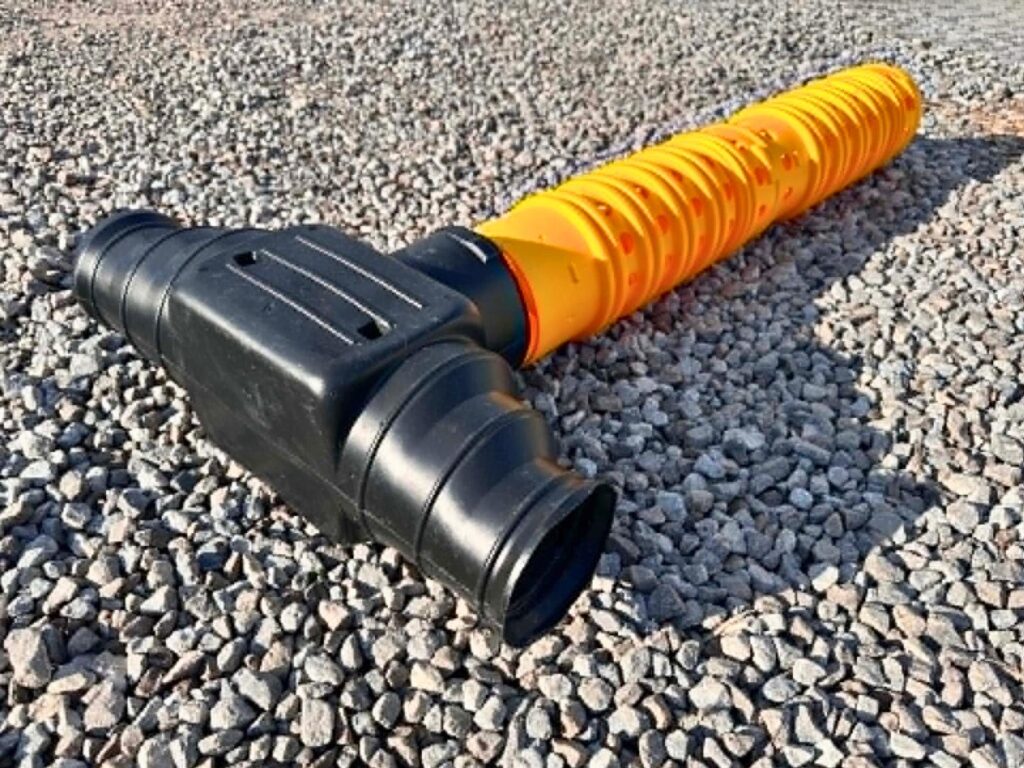
Drainage tile rolls come in a variety of sizes, with the most popular being 4″ in diameter. They can be perforated, solid or in filter cloth.
Selecting a high quality product manufacturer will help maximize your long term return on investment. Our primary subdrain manufacturer is now using third party certified testing on their subdrain. Subdrains, culverts, and other materials will be checked for consistency and quality at the time of manufacturing. Resulting in a better product, longer functional lifespan, more efficient installation, and more confidence for customers. High quality manufacturing and precision leads to faster and easier installation, reducing labour costs.
Purchase From a Trusted Distributor
Modern drainage technology has proven that close drainage systems, high quality product selection, and proper subdrain installation will increase crop yield for better long-term profitability. If you’d like customized advice on your project you can connect with our team any time by phone or email.
“Whether you’re an existing client or simply in a bind to get tile and other last minute supplies for your farm, our message is simple, we have it when you need it.” says Kyle Wasylin, Technical Sales Manager, Ontario Agra Piping & Supplies Inc.
Farmers of any scale can use these government programs to assist with their farm drainage project. Supporting a financially affordable investment up front, while improving soil health and crop yield long term. Meaning you can spend less now that you may have expected, while earning more for decades to come.