Combining Straw Matting with Grass Seed for Effective Erosion Control
Erosion & Sediment Control techniques are designed to protect an exposed soil surface while preventing or reducing the release of sediment to environmentally sensitive areas, and promoting re-vegetation as soon as possible. You can find our full list of erosion control products here.
Erosion and sedimentation are naturally occurring processes of loosening and transport of soil through the action of wind, water or ice. These processes may result in an adverse impact on the environment. Such as affecting our water supply, damage to adjacent land, or degradation of aquatic habitat. This is especially common on sloped areas during the landscaping and construction projects.
One of the best ways you can reduce erosion is by combining straw matting with grass seed. This process stops surface sediment shifting and establishes a root system for long-term stability. Below you’ll find a breakdown of the products involved in a project like this, along with some steps and techniques to get the job done right.
What is Straw Matting
Straw matting, also known as an erosion control blanket, is made of various degradable materials, such as straw and coconut, mechanically stitch-bonded to a biodegradable netting structure.
Benefits:
- Offers dimensionally stable protection to better hold seeds and soil in place, and encourage rapid growth.
- Helps increase water infiltration into the soil.
- Retains soil moisture to promote seed germination.
Used For:
- Short-term: mild slope and channel applications requiring erosion control for up to 12 months depending on moisture, light, and environmental conditions.
- Extended-term: extreme slope and channel applications requiring erosion control for up to 36 months depending on moisture, light, and environmental conditions.


Using Grass Seed With Your Straw Matting
Choose the Right Seed: At Ontario Agra we offer two different types of grass seeds, both are filler-free and developed in Ontario to meet the specific needs of our soil types and weather conditions.
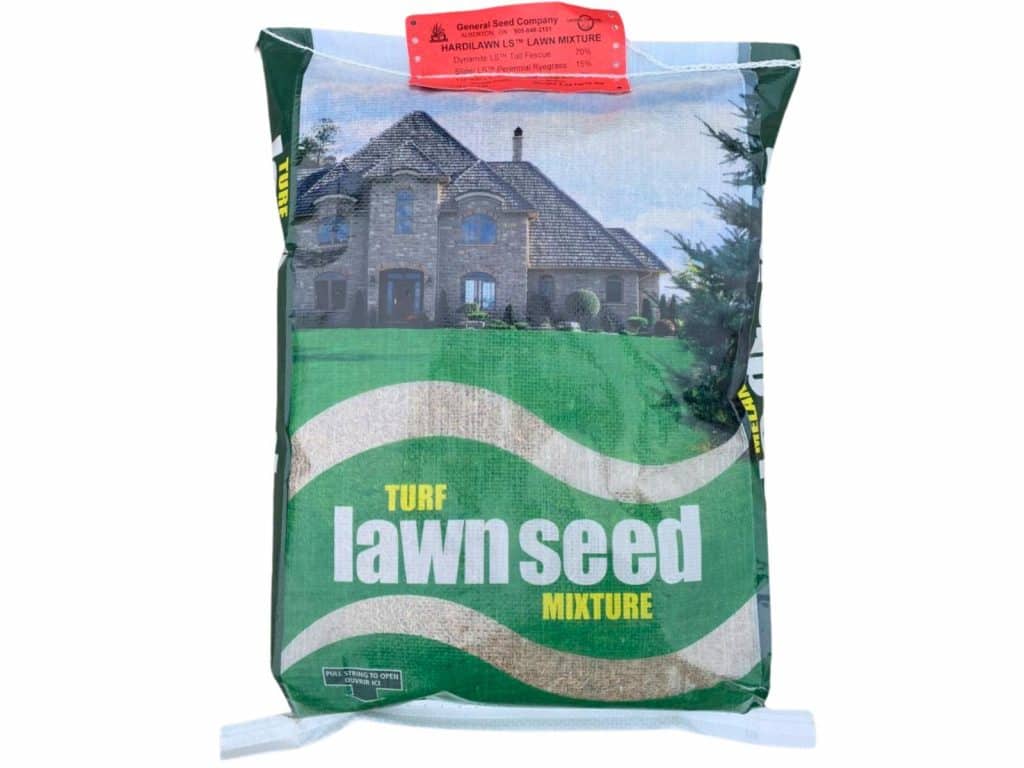
50 LB bag of high-quality grass seed. We recommend an estimated 200 LBS of seed per acre when starting a new lawn.
TRADITIONAL MIX
20% Kentucky Bluegrass
10% Creeping Red Fescue
40% Turf Type Perennial Ryegrass
30% Annual Ryegrass
Traditional lawn mixture is great for patching up spots or establishing a new lawn. It performs well on all soil types.
50 LB bag of premium grass seed. We recommend an estimated 200 LBS of seed per acre when starting a new lawn.
Premium Plus™ Mix
35% Kentucky Bluegrass
35% Creeping Red Fescue
30% Slider LS™ Perennial Ryegrass
Premium Plus LS™ lawn mixture is suited for any soil type with Lateral Spread™ Perennial Ryegrass.
Installation and Grass Seeding Guide
For best results, we recommend spreading grass seed first, then covering your area with straw matting.
Sowing the Seed
Application: Use a broadcast or drop spreader for even coverage, applying half the seed in one direction and the other half perpendicularly.
Quantity: We recommend using 200 lbs of seed per acre when starting a new lawn. For overseeding and improving your existing lawn, this amount can be cut in half. Do your best to apply the same techniques and timing while overseeding as you do with seeding a new lawn.
Seed-to-Soil Contact: Lightly rake the seed into the soil (no deeper than 1/8 to 1/4 inch).
Straw Matting Installation Steps
- Roll out your straw matting to cover your freshly seeded area.
- Use landscape pins, wooden stakes, biodegradable stakes, or rebar to pin your straw matting in place as you unroll it.
Post-Seeding Care
Watering: Keep the seeded area consistently moist but not saturated. Water daily for 7–21 days until germination occurs. One of the major benefits of spring planting is that the increased rain will take care of this for you.
Mowing: Wait until the grass is 7.5–10 cm (3–4 inches) high for the first mow.
Weed Control: Do not apply weed control products until after the new grass has been cut at least 3 times.
This combination of products is an easy and effective way to limit erosion on sloped landscaping projects. If you have an upcoming job that may benefit from customized erosion control solutions. Connect with our team by phone and email for more information or to get a quote.